
Paramount’s Massive $108 Billion Bid Challenges Netflix for Warner Bros Discovery

Paramount vs Netflix

A dramatic power struggle is unfolding in Hollywood and Wall Street as Paramount, backed by billionaire Larry Ellison and led by his son David Ellison, has stepped into direct competition with Netflix to acquire Warner Bros Discovery. What began as a straightforward bid by Netflix to secure Warner’s studios and streaming operations has now escalated into a much larger and far more political contest, with Paramount submitting a massive all-cash proposal that has shocked analysts, shareholders and regulators alike.

Paramount’s bid is not subtle. The company has publicly offered $30 per share for all of Warner Bros Discovery — a valuation that pushes the total deal close to $108 billion including debt — positioning itself as the group willing to buy the entire company, not just the streaming and studio assets. Netflix, in comparison, had offered $27.75 per share in a mixed cash-and-stock deal, which covered only HBO and Warner Bros studios but excluded key networks such as CNN and other cable properties. For Netflix, the intention was to carve out the entertainment core and spin off the remaining networks, while Paramount is asking shareholders to let them take everything under one roof.

David Ellison has not hidden his confidence. Speaking to CNBC, he argued that Paramount’s offer is a “superior alternative” and insisted that shareholders are being presented with almost $17.6 billion more in cash than Netflix is currently offering. From his perspective, the choice should be easy: Paramount wants Warner in its entirety, and it wants to pay upfront, without the complexity of mixed stock structures. His messaging is clear, direct, and aimed squarely at investors who may be growing impatient with Warner’s financial situation.

But Netflix is not backing down. The company has insisted the deal is “already done,” though industry insiders suggest this is far from the reality. Ted Sarandos, Netflix’s co-CEO, told investors he expected a counteroffer — and Paramount delivered exactly that. Sarandos, however, remains publicly unworried, projecting confidence even as the regulatory and political temperature around the deal continues to rise.

Politics, surprisingly, is exerting heavy influence over the situation. Former U.S. President Donald Trump has openly warned that Netflix’s acquisition of Warner Bros Discovery “could be a problem” for regulators, citing concerns about market share concentration. Trump’s comments added a sudden, unexpected pressure point on Netflix, especially since Netflix’s dominance in streaming is already a frequent point of discussion in antitrust circles. In an unusual twist, Trump also stated he intends to “be involved in the decision,” adding a layer of unpredictability to the regulatory process that analysts are now watching closely.

Ironically, the political tensions are also challenging Larry Ellison himself, who has been a notable Trump ally. Despite Ellison’s long-standing ties to the former administration and his placement of Trump-aligned figures in strategic positions, it appears that Netflix’s influence and regulatory concerns have weakened any expected political support. This adds yet another layer of complexity to a bidding war that is no longer purely financial but now deeply entangled with public policy and competitive fairness.

From a business perspective, Paramount’s ambition is clear: merging Warner’s massive content library — from HBO to DC to CNN — with Paramount’s own assets could create a Hollywood superpower capable of directly countering Netflix, Apple, Disney and Amazon in the global media battlefield. Analysts who favour Paramount’s offer argue that the Ellison family has the financial strength and long-term vision to revitalise Warner’s struggling business segments, and that their all-cash proposal offers the cleanest and most shareholder-friendly path forward.

However, regulatory hurdles remain daunting. A combined Paramount–Warner entity would still face intense scrutiny, but Netflix owning Warner Bros Discovery would likely face even stronger antitrust pressure, especially given concerns about job cuts, content consolidation and rising subscription prices. Hollywood unions have already expressed discomfort with Netflix’s proposal, fearing that an acquisition by the world’s largest streaming platform could reduce competition and worsen labour conditions.

The motivation behind Netflix’s bid is obvious: locking down Warner’s intellectual property would give Netflix exclusive, long-term access to some of the most valuable entertainment franchises in the world. For a company aggressively expanding into gaming, live events, merchandising and broader consumer ecosystems, Warner’s IP library could accelerate Netflix’s ambitions dramatically.

But the outstanding question remains — who will win? Paramount is offering more money, more certainty and a complete acquisition. Netflix is offering strategic synergies, unmatched streaming reach and a deep understanding of global content distribution. Both bids face intense political and regulatory scrutiny, and both come with massive industry-wide consequences.

For now, the saga is far from over. Paramount has accused Warner Bros Discovery’s board of favouring Netflix unfairly and claims the sale process is biased. Warner executives reportedly referred to the Netflix deal as a “slam dunk” internally, raising eyebrows and causing further friction. Analysts remain divided on which bid is more realistic or more beneficial, but one thing is clear: this battle will reshape the entertainment industry for years to come.

As the story develops, the world’s biggest streaming and media companies are preparing for a showdown that blends business, politics and the future of Hollywood — and the outcome is still anything but certain.

OnePlus 15R Review – 7,400mAh Battery Monster with 165Hz Display

OnePlus 15R Review – A Serious All-Rounder in “R” Clothing

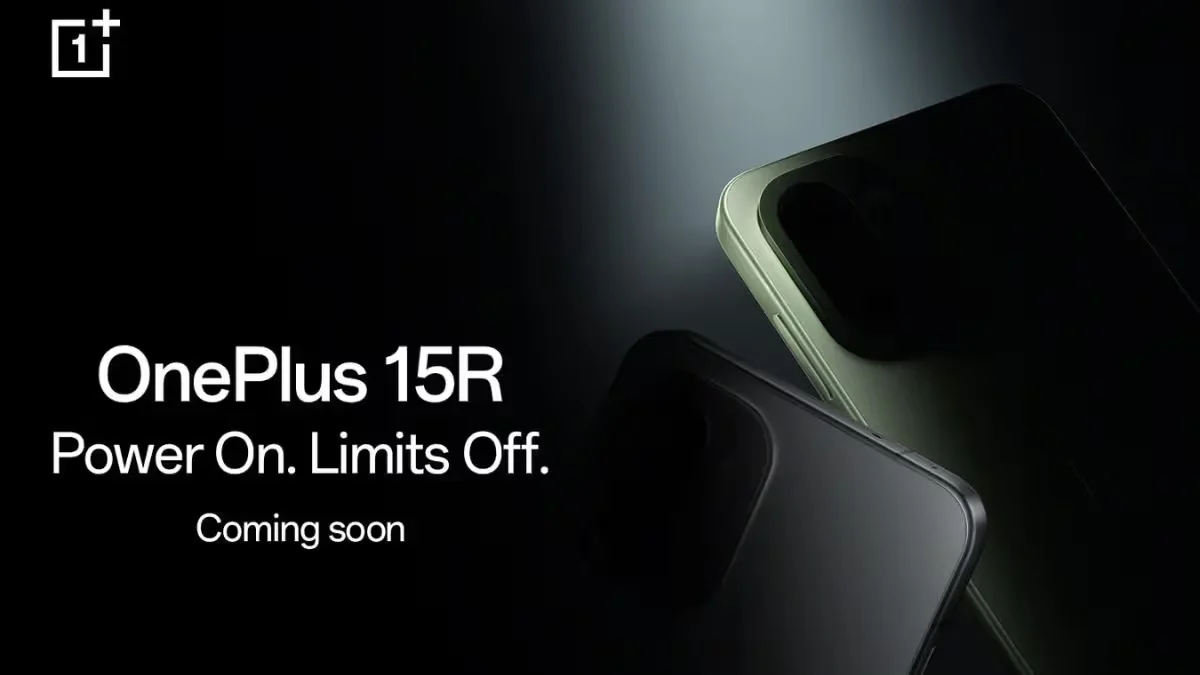
The OnePlus “R” series has always been about giving you near-flagship performance at a more approachable price. With the OnePlus 15R, that idea is being pushed much further. On paper, this phone looks less like a cut-down flagship and more like a very aggressive all-rounder that just happens to sit below the main OnePlus 15. In this OnePlus 15R review based on all the confirmed specs and credible teasers so far, it already feels like one of the most interesting upper mid-premium phones heading to the Indian market this year.

OnePlus 15R Review

Launching in India on December 17 alongside the OnePlus Pad Go 2, the OnePlus 15R is positioned as a rebranded version of the OnePlus Ace 6T from China – but with OxygenOS, India-focused tuning and a pricing strategy aimed directly at performance-hungry users who don’t want to spend flagship money.


Design and Build – Familiar, Functional and Tough

Visually, the OnePlus 15R sticks close to the Ace 6T. The back features a square camera module with two lenses and an LED flash, keeping things clean instead of cluttered. The OnePlus branding sits neatly in the centre, and the frame appears to be metal with a flat-sided look that should feel modern and solid in the hand. Antenna bands cut into the sides, hinting at serious network hardware inside.

The phone is expected to launch in Charcoal Black and Minty Green in India, which matches the more understated, slightly mature design direction OnePlus has taken recently. Power and volume buttons live on the right, with an extra button on the left that could be tied to specific functions depending on the market and software build. At the bottom, the USB Type-C port and speaker grill sit in the usual layout.

What really stands out on the durability front is the certification. The OnePlus 15R is rated IP66, IP68, IP69 and even IP69K, which means dust resistance, water immersion and protection against high-pressure water jets. For a phone in this segment, that level of ruggedness is rare. It positions the 15R as a device you can actually take out in the rain, on treks or to outdoor shoots without constantly worrying about it.

Display – 165Hz at This Price Is No Joke

If you have been following the OnePlus 15, you’ll immediately recognise the panel on the OnePlus 15R. This is a 165Hz 1.5K AMOLED display, expected to be around 6.8 inches with a resolution similar to 1,272 x 2,800, as seen on the Ace 6T. For a phone that will likely sit closer to the upper mid-range segment in pricing, that spec alone is wild.

The high refresh rate, paired with 1.5K resolution, hits a sweet spot between sharpness and efficiency. The display is rated to hit up to 1,800 nits of peak brightness, which should make it more than usable outdoors. At the other end, it can dim all the way down to 1 nit for comfortable viewing at night. TÜV Rheinland Intelligent Eye Care 5.0 certification also hints at better blue-light management and flicker handling, which matters for people who spend hours scrolling, reading or gaming.

There is a hole-punch cutout for the selfie camera at the top, but the surrounding bezels are expected to be slim and fairly symmetrical, based on the Ace 6T design. For a phone that is likely to be priced well below the main OnePlus flagship line, this display might end up being one of its biggest selling points.


Performance – Snapdragon 8 Gen 5 in an “R” Phone

The OnePlus 15R review becomes even more interesting once you look at the chipset. Rather than using a slightly older flagship chip, OnePlus is going straight to Qualcomm’s latest Snapdragon 8 Gen 5, built on a 3nm process. That instantly elevates the 15R from “performance mid-ranger” to “flagship-grade hardware at a lower price”.

OnePlus has also claimed that this Snapdragon 8 Gen 5 implementation was co-developed with Qualcomm over a two-year period, which implies custom tuning on power profiles, thermals and gaming stability. Early Geekbench results hint at strong multi-core numbers, with scores above 9,000 in some tests, and the CPU cluster layout includes two prime cores at 3.80GHz backed by six performance cores at 3.32GHz.

Where this should make a big difference is sustained gaming. The 15R is expected to support high-refresh gaming in titles like BGMI and Call of Duty Mobile at 120 FPS, and with a 165Hz panel, there is room for frame interpolation or future higher-FPS support down the line. Paired with UFS 4.1 storage and at least 12GB of RAM in the base configuration, this phone is positioned to offer serious speed.

On the software side, the OnePlus 15R will ship with OxygenOS 16 based on Android 16 in India. That alone is a big draw for users who prefer the cleaner, more minimal OxygenOS feel over heavy custom skins. It also means better feature parity and long-term update support compared to its Chinese Ace counterpart, which runs ColorOS/HydrogenOS.


Cameras – Focused, Practical Rather Than Over-the-Top

While the main OnePlus 15 aims to be more of an all-out flagship with extensive camera hardware, the OnePlus 15R appears more focused and practical in this area. The rear camera setup is expected to consist of a 50MP primary sensor and an 8MP ultrawide camera, mirroring the Ace 6T.

On paper, that may not sound as flashy as triple or quad-camera setups, but this can actually work in the phone’s favour if OnePlus nails the tuning. The confirmed support for 4K 120fps video recording is a big deal at this price; it was previously reserved for the flagship OnePlus 15. Being able to capture 4K 120fps opens up proper slow-motion workflows for creators who want smoother cinematic motion without dropping to 1080p.

The front camera is expected to be a 16MP unit housed in the punch-hole cutout, which should be adequate for social media, video calls and casual vlogging. If the 15R inherits even a portion of the image processing improvements OnePlus has made on its flagship line, day-to-day performance from this dual-camera setup could be more than enough for most users.


Battery and Charging – 7,400mAh in an “R” Series Body

Battery is where the OnePlus 15R really starts to separate itself from its competitors – and even from the main OnePlus 15 in some ways. The company has confirmed that the 15R will house a 7,400mAh cell, which is the largest battery ever put into a OnePlus phone. That’s 100mAh more than the OnePlus 15 and only slightly smaller than the Ace 6T’s 8,300mAh unit.

The underlying tech is important here. OnePlus is using Silicon Nanostack technology with 15 percent silicon content in the anode, which boosts energy density and helps the battery maintain at least 80 percent of its original capacity even after four years of regular use. For heavy gamers, binge streamers or people who simply do not want to charge their phones twice a day, this is a huge win.

Fast charging on the OnePlus 15R is confirmed at 80W. It’s not quite as extreme as some of the 100W+ solutions on other devices, but paired with such a large battery, it should still deliver a very practical experience – a big top-up in a short time, without overly stressing the cell. If it gets close to the Ace 6T’s behaviour, you can expect a very comfortable single-day or even multi-day battery life for many users.


Price, Variants and Positioning in India

At the time of writing this OnePlus 15R review, the exact Indian price has not been officially revealed. However, there are enough reference points to make an educated guess. In China, the Ace 6T starts at CNY 2,599, which roughly translates to around ₹33,000. Factors like taxes, component costs and OnePlus’ usual India pricing strategy suggest that the OnePlus 15R could land above that – but still noticeably below the full flagship OnePlus 15.

The previous OnePlus 13R launched at ₹42,999 in India, and it would not be surprising to see the OnePlus 15R land somewhere in that band or slightly higher, especially given the Snapdragon 8 Gen 5, IP69-level protection and 7,400mAh battery. The phone will be sold via Amazon India, the OnePlus online store, and likely offline retailers as well, with Charcoal Black and Minty Green confirmed as launch colours.

If OnePlus manages to keep the effective price near the low-₹40K to mid-₹40K segment after launch offers, bank discounts and exchange bonuses, the OnePlus 15R could become one of the most aggressive performance-focused phones in the market.


Early Verdict – Is the OnePlus 15R Worth Waiting For?

Based on everything we know so far, the OnePlus 15R feels like a textbook example of how to do an “R” series phone right. This isn’t just a watered-down flagship; it’s a device with its own identity. A 7,400mAh battery, Snapdragon 8 Gen 5, a 165Hz 1.5K AMOLED display and 4K 120fps video support are headline features you simply don’t expect in a phone that will sit below the main OnePlus 15 in price.

There are still open questions, especially around real-world camera performance, thermal behaviour during extended gaming and the exact Indian pricing. But judging purely by the confirmed specifications and what we know from the OnePlus Ace 6T, the OnePlus 15R is shaping up to be a serious contender for anyone looking for a long-lasting, high-refresh, performance-centric phone that doesn’t cut corners on build quality and durability.

If you are planning an upgrade around the ₹40K–₹50K range and value battery life, display smoothness and raw speed over having three or four rear cameras, the OnePlus 15R is absolutely a phone worth waiting for.