
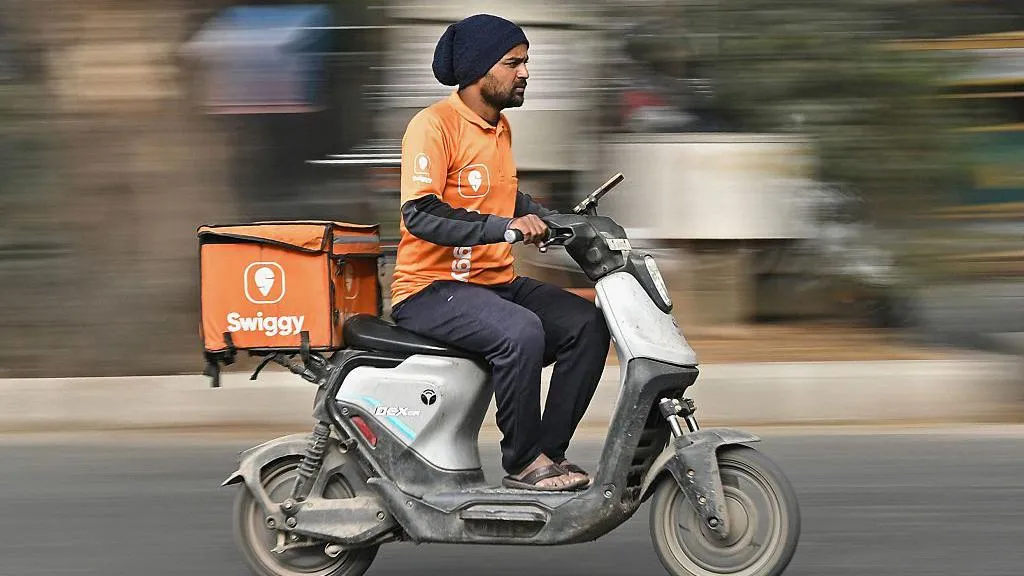
India’s central government bans 10-minute delivery promise, citing growing concerns over the safety and working conditions of delivery riders.
The directive follows discussions between the Ministry of Labour and Employment and representatives from major platforms such as Blinkit, Zomato, Zepto and Swiggy, after a nationwide strike by delivery workers raised alarms about dangerous work practices. Sources familiar with the matter told the BBC that the government urged companies to move away from rigid delivery timelines that could encourage risky behaviour on the road.
Quick commerce has exploded in India’s urban centres since the Covid-19 pandemic, allowing customers to order groceries, electronics and household items within minutes using neighbourhood “dark stores.” While the model has been hugely popular with consumers, critics argue that ultra-fast delivery promises come at a human cost.
Last month, thousands of delivery workers across the country went on strike, demanding fair pay, safer working conditions and dignity at work. Although customer disruption was limited, the protests triggered a wider debate about pressure on gig workers in one of the world’s fastest-growing digital economies.
Following the strike, a closed-door meeting was held between government officials and company executives. A labour ministry official, speaking on condition of anonymity, said firms were advised to remove explicit time-bound delivery promises from their branding and marketing.
Some companies have already begun complying. Blinkit has removed the “10-minute delivery” promise from its public messaging, and industry sources say Swiggy is also in the process of doing so. Other platforms are expected to follow in the coming days.
However, in practice, delivery times shown on apps in several locations still remain under 10 minutes. This is largely because dark stores are located close to residential areas, allowing short delivery distances even without formally advertised deadlines.
The government’s intervention has been welcomed by labour unions. The Indian Federation of App-Based Transport Workers and the Telangana Gig and Platform Workers’ Union described the move as a “significant and much-needed step” toward protecting the lives and dignity of gig workers.
Union leaders argue that the 10-minute model encouraged unsafe riding, extreme stress and long working hours. Many delivery workers have previously told the BBC that missing delivery targets could lead to penalties, fewer orders or loss of incentives. Some reported working more than 12 hours a day while earning around ₹20,000 a month.
“For most workers, gig work is not a side hustle—it is their primary source of income,” said researcher and author Vandana Vasudevan. Despite working full time, she noted, many delivery partners lack social security, career progression, training or long-term stability, while remaining heavily dependent on platform algorithms.
Not all workers are convinced the change will bring meaningful relief. Some say pressure will continue even without visible deadlines, as speed, customer ratings and delivery frequency still influence earnings. Others welcomed the move but stressed that better pay, parking facilities and transparent incentives remain unresolved issues.

Government bans 10-minute delivery amid rising gig worker safety concerns
The companies, meanwhile, argue that fast deliveries are enabled by logistics planning rather than unsafe riding. Zomato founder Deepinder Goyal has previously stated that delivery partners are not shown promised delivery times, and that short distances and efficient packing allow quick fulfilment without increased speed. Workers, however, contest this view, pointing to declining per-order payouts and milestone-based incentives that reward volume and speed.
The debate comes as India’s gig economy continues to expand rapidly. According to NITI Aayog, the number of gig workers is expected to rise from 7.7 million in 2021 to over 23 million by 2030.
The government has begun taking steps to bring gig and platform workers under a formal welfare framework. The Code on Social Security, notified last year, enables their registration on a national database and provides access to health, accident insurance and old-age support. It also proposes a social security fund, with major aggregators contributing a portion of their annual turnover.
For now, the government’s message is clear: speed should not come at the cost of safety. Whether removing the 10-minute promise leads to real change on the ground remains to be seen.
Read More-
M5 MacBook Pro review: exceptional performance leap or minor upgrade?
M5 iPad Pro review: hands-on testing and M4 upgrade check
ChatGPT Go free in India — OpenAI’s biggest expansion for Indian users in 2025
Redmi K90 Pro Max Launched: The Ultimate Value Flagship of 2025?
iPhone 17 Review: Smarter, Sleeker, Stronger
iPhone 17 Pro Max – The Most Powerful iPhone Yet
Best 5 Camera Phones in India for Stunning Photos (2025) – Full Reviews