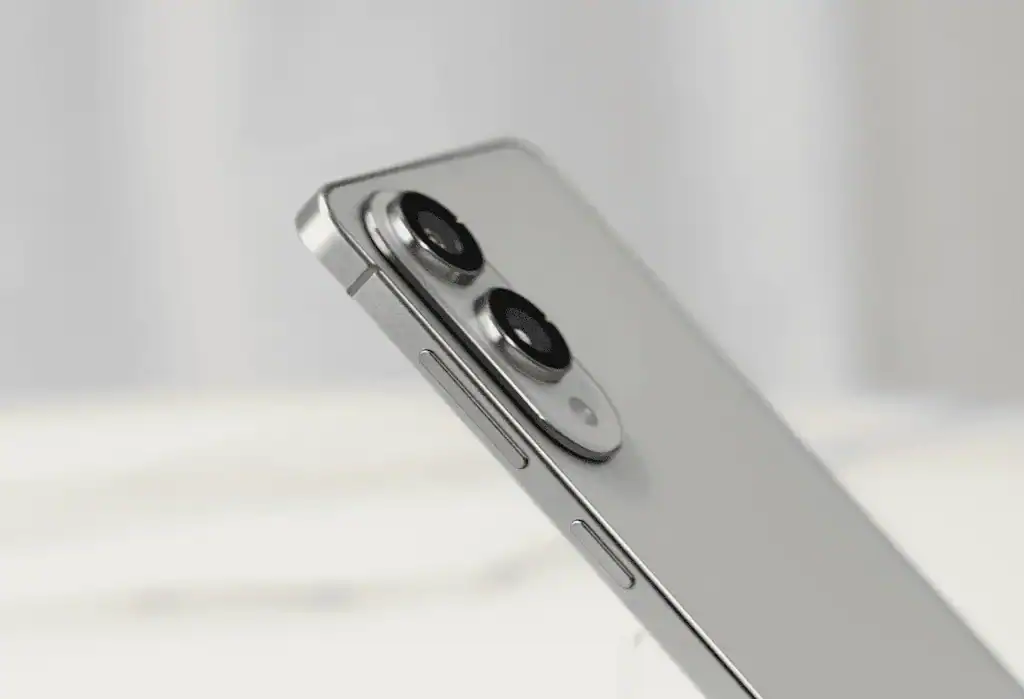

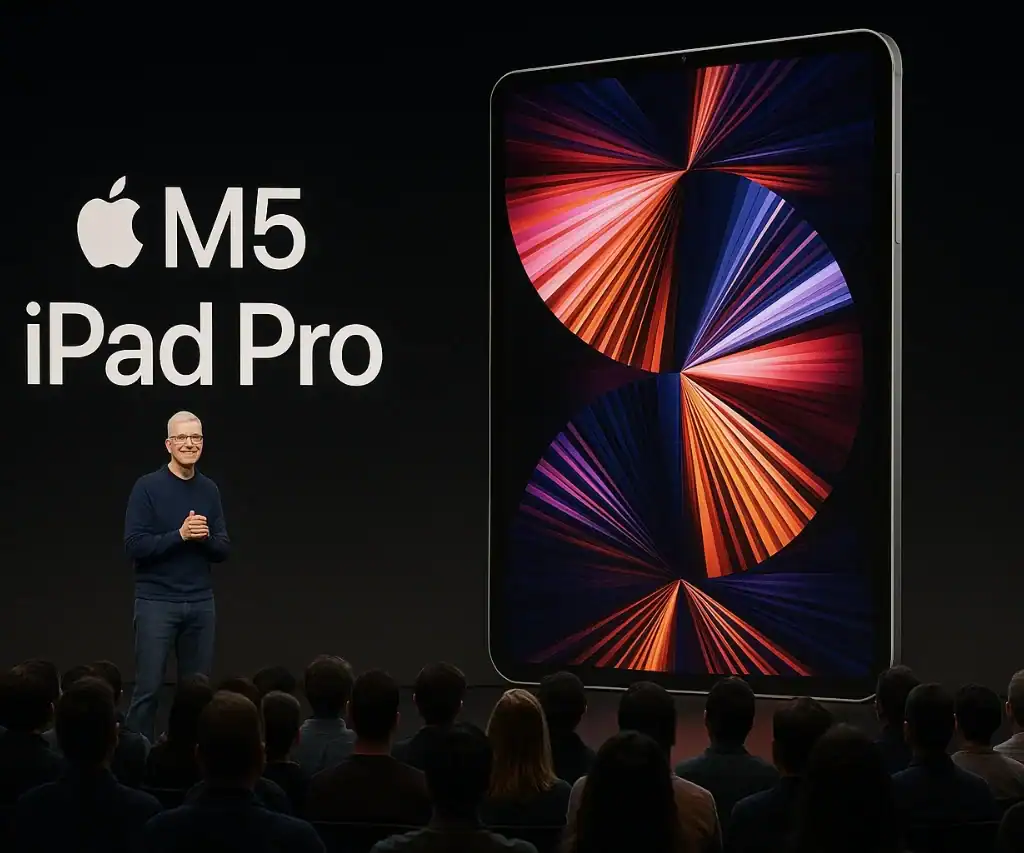
The M5 iPad Pro review experience begins the moment you lift the device out of the box — and the difference in hardware design is noticeable instantly. This generation feels thinner, sharper and more minimal than the M4 ever did, almost like Apple has taken the “Pro tablet” form factor and flattened it to its absolute physical limit. The unboxing itself is familiar — iPad, paperwork, braided USB-C cable — but the first in-hand moment is where the M5 immediately starts to justify its existence.
Once powered on, the first impression is how aggressively Apple is leaning into thinness this year. The chassis is lighter, the bezels feel slightly tighter, and the device feels closer to a productivity slate than a consumer tablet. Even before testing performance, this feels like a hardware-level reset of Apple’s premium tablet lineup rather than a mild refresh.
The early testing also shows two things immediately: the display appears brighter at peak, and general responsiveness feels snappier in system animations and app switching. Apple didn’t advertise a UI speed bump, but it’s clearly there — transitions feel more direct and less floaty compared to the M4. This gives the M5 a more “Mac-like” hardware personality even before diving into pure benchmarks.
Thermals during setup are surprisingly cool — even during background indexing, the device doesn’t warm up as noticeably as the M4 did on first-boot. That’s a subtle but important win for users planning heavy workflows like editing, multitasking or external display use. There’s a sense that this generation has been tuned not just for peak power but for sustained power, which is something Apple has historically held back for laptops.
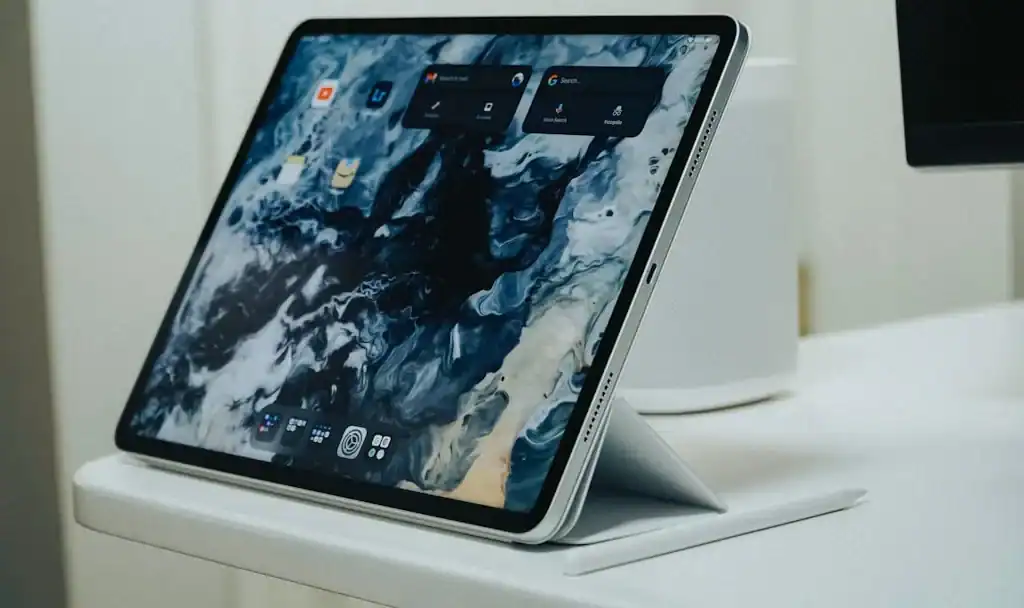
Where the difference between the two models becomes obvious is in responsiveness under load. The M4 was already fast, but under multitasking you could still “feel” it shifting between tasks — quick, but aware of transitions. On the M5, those transitions feel instant in a way that almost removes the sensation of the OS working in the background. When using split view or keeping multiple apps in memory, it behaves more like a laptop than a tablet.
The biggest practical upgrade isn’t raw speed — it’s consistency. On the M4, heavy apps (editing / canvas apps / AI photo work) eventually made the device warm and slightly throttle after extended use. On the M5, that effect either takes dramatically longer to appear or doesn’t show up at all in early testing. The tablet stays cooler to the touch, and that means performance feels the same at minute 5 and minute 30.
Another noticeable difference is screen fluidity under real motion workloads like drawing or precision swiping. The M5 feels more “locked in” to your input. The Apple Pencil latency subjectively feels lower, not dramatically, but enough that you notice it when sketching or dragging fine UI elements. It feels closer to pen-on-paper than the M4 ever did — not in marketing language, but in motion control.
In UI tasks, the M4 sometimes had micro-stutters when loading heavier iPadOS apps from cold start. The M5 shrinks those stutters to nearly zero. It’s not that the M4 was slow — it’s that the M5 makes the absence of friction feel normal.
Battery behavior is also slightly improved in practical use — not because of bigger capacity, but because the chip appears more efficient during idle and mid-load usage. The M4 drained faster when under mixed-use (Safari + Notes + video pip), while the M5 seems to sip power until you actually push it.
In other words: the upgrade is visible inside daily workflow, not spec sheets. The M5 iPad Pro review takeaway so far is that the shift is not about headline power — it is about sustained power and thermal calmness.