The Razr 60 is Motorola’s latest attempt to make folding phones feel less like luxury toys and more like everyday tech. It’s the most affordable member of the new Razr 2025 lineup, designed to bring the flip experience to the mainstream. With a new hinge, improved displays, and smarter AI software, it looks like a serious contender.
But does the Razr 60 finally make foldables practical for everyone—or is it just another stylish experiment that stops short of greatness? Let’s dive in.
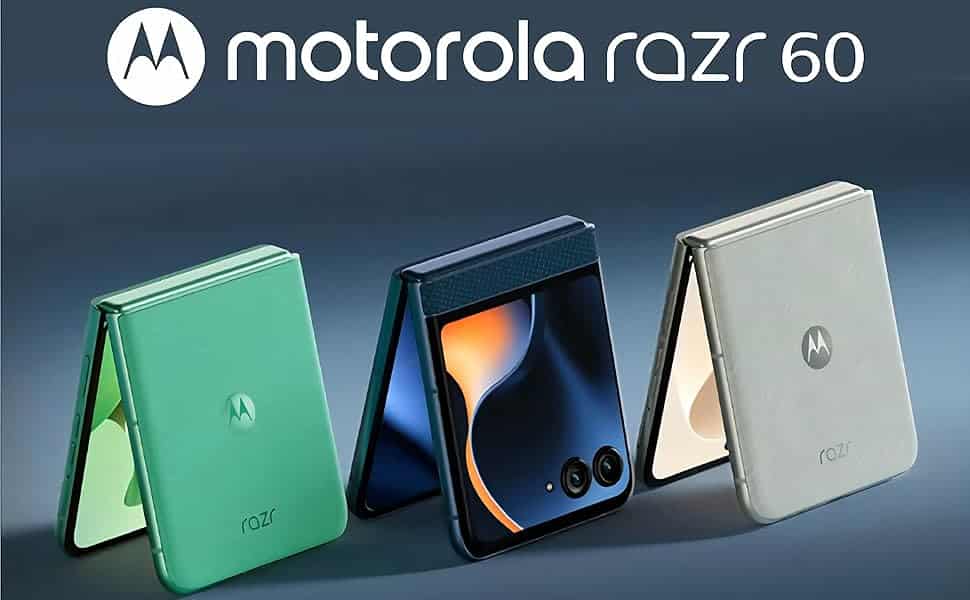
Design & Build Quality: A Premium Feel That’s Finally Polished
Motorola clearly took notes from last year. The Razr 60 feels solid and well-crafted, combining aluminum sides with premium materials on the back. Depending on the color, you get glass, woven fabric, or even grippy vegan leather. It’s classy, not flashy.
The hinge deserves real credit. Made of reinforced stainless steel (and in some variants, titanium), it feels robust and folds almost flat—no visible air gap here. Motorola claims it can survive half a million flips, which, if true, is flagship-level durability for half the price.
Ergonomically, the Razr 60 nails portability. Folded, it slips easily into any pocket. Unfolded, it feels like a regular 6.9-inch smartphone. The improved IP48 rating adds a bit of dust resistance—something most budget foldables still skip.
Overall, it’s a design that finally bridges form and function. It looks premium and feels reassuringly strong.
Displays: Dual Screens, Dual Personalities
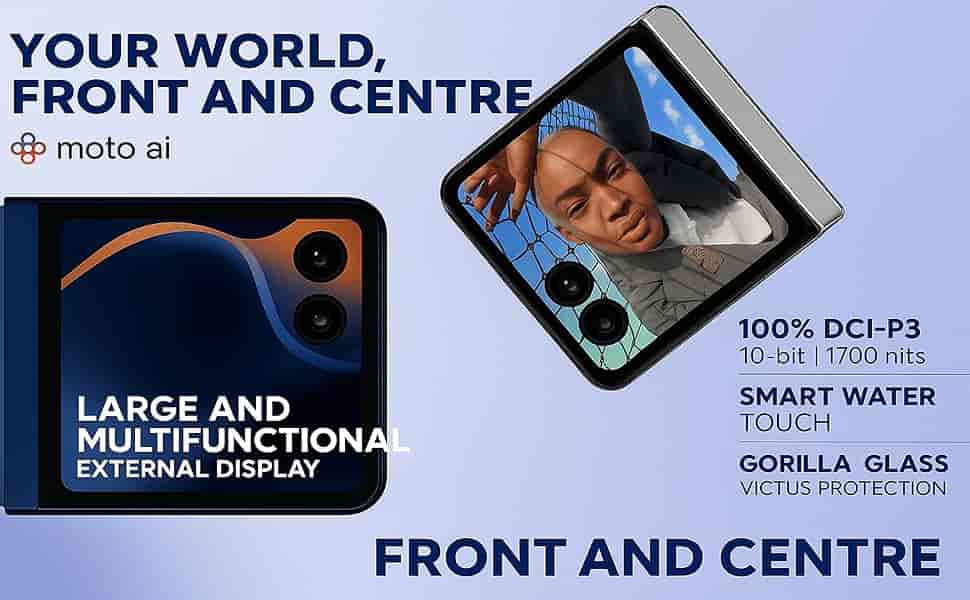
The Razr 60 is really about its two displays—and both are surprisingly capable.
Main Display
A 6.9-inch LTPO OLED panel dominates the inside. It’s FHD+, runs up to 120 Hz, and supports HDR10+. Colors pop, contrast is deep, and brightness hits around 1200 nits, making outdoor use easy. The crease? Still there, but subtle—noticeable only when you go looking for it.
Thanks to LTPO tech, it can drop refresh rates down to 1 Hz, saving power when you’re just reading or checking notifications.
Cover Display
The 3.6-inch outer screen feels almost as sharp as the main one. It’s bright (up to 1250 nits auto), responsive with a 90 Hz refresh rate, and more functional than ever. You can reply to messages, control music, access quick toggles, or even launch apps like YouTube and Maps—without unfolding.
The best part is continuity: you can start a video on the big screen and continue right where you left off on the outer one. This seamless flow makes the Razr 60 feel genuinely futuristic.
Performance: Reliable, Not Relentless
Under the hood, the Dimensity 7400X powers the Razr 60. It’s a mid-range chip optimized for foldables, capable of handling dual-screen operations efficiently. Day-to-day use feels snappy—multitasking, messaging, and social apps glide along smoothly.
However, this isn’t a performance monster. In synthetic benchmarks, it performs respectably but falls short of Snapdragon-equipped rivals. During long gaming sessions, some thermal buildup is noticeable, though Motorola’s cooling keeps things under control.
The phone comes in 256 GB and 512 GB variants, both with fast UFS 4.0 storage (no microSD slot). For most users, that’s plenty of space and speed.
In short: it’s fast enough for almost everyone, but power-hungry gamers will want something stronger.
Battery & Charging: Bigger Cell, Same Story
Motorola bumped the battery up to 4500 mAh, and on paper that sounds great. In reality, results are mixed. Light-to-moderate users can expect a full day of use, but push it with camera, streaming, and dual-screen multitasking, and the phone struggles to last into the evening.
Independent tests clocked around 9.5 hours of active use, which is okay—but not impressive.
Charging is at least convenient: 30 W wired (a 33 W charger in some regions) and 15 W wireless, plus reverse wireless for earbuds. You’ll get roughly 60 % in 30 minutes and a full charge in under an hour. Not bad, but still behind OnePlus and Xiaomi’s crazy-fast numbers.
Software & AI: A Smarter Razr
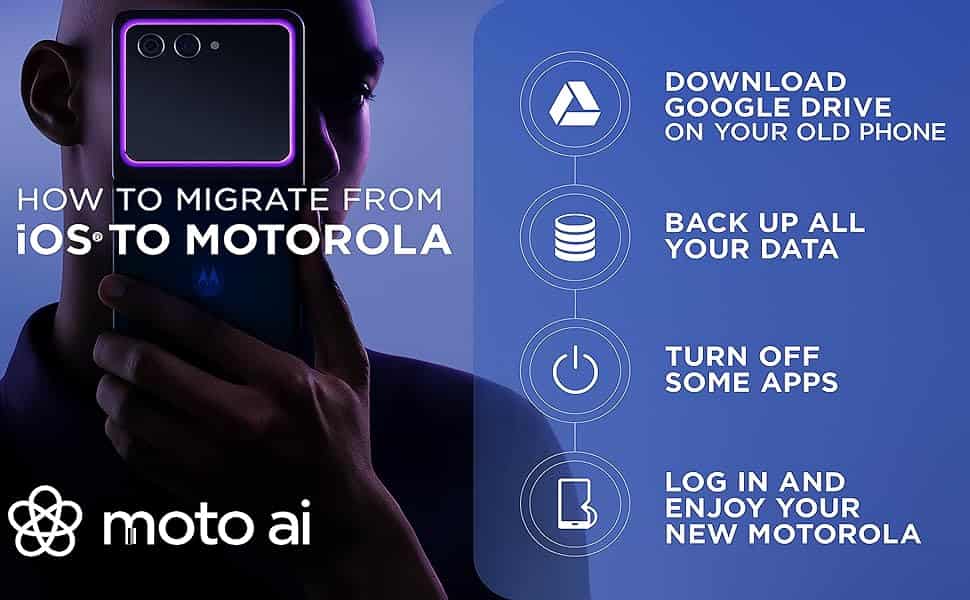
Running Hello UI on Android 15, the Razr 60 feels clean, fluid, and familiar. Motorola promises three major updates and four years of security patches, which is decent—though still shy of Samsung’s 7-year commitment.
What stands out is Motorola’s new AI suite integrated with Google Gemini.
Moto AI 2.0 provides contextual assistance based on what’s on your screen.
Next Move suggests actions (like adding travel details to Calendar).
Image Studio lets you create quick stickers or GIFs.
Notification Summary condenses your day’s alerts.
Explore with Plexity offers smart comparisons—a cooler twist on Circle-to-Search.
The implementation is subtle; it feels like a natural extension of the phone, not a marketing gimmick. However, some features still rely heavily on Google’s ecosystem, meaning offline AI use remains limited.
Camera System: Practical, Not Perfect

The Razr 60 carries a dual-camera setup on the back—50 MP main (OIS) and 13 MP ultrawide with autofocus—plus a 32 MP selfie cam inside.
In daylight, the main camera captures crisp, vibrant shots with wide dynamic range. Detail is solid, though Motorola’s sharpening can feel a bit aggressive. The ultrawide doubles as a macro lens, producing surprisingly fun close-ups.
Low-light photos are decent, maintaining accurate colors and good exposure, but the images look more processed than natural. Video recording tops out at 4K 30/60 fps, and thanks to the hinge, you can shoot hands-free vlogs or use air-gesture controls to trigger the shutter—small touches that make the experience unique.
Selfies from the 32 MP sensor are sharp with pleasant skin tones, especially when you use the cover screen as a viewfinder for the main cameras—a foldable-specific flex that influencers will love.
Pricing & Positioning: The Everyday Foldable
At ₹49,999 in India (around $599 globally), the Razr 60 undercuts its predecessor by roughly ₹15 K while offering a better hinge, improved durability, and smarter software. That’s impressive.
Still, compromises exist: mid-range performance, average battery endurance, and cameras that don’t quite reach flagship finesse. But that’s the point—the Razr 60 isn’t trying to win the specs war. It’s trying to make foldables approachable.
For someone who values compactness, flair, and practicality over sheer power, it’s a compelling choice.
Verdict: The Razr 60 Finally Makes Foldables Make Sense
The Razr 60 is Motorola’s most well-rounded flip phone yet. It nails the essentials—design, hinge strength, and usability—while keeping price reasonable. The displays are gorgeous, the software feels smarter, and the experience finally feels mature.
But it’s not perfect. Battery life is average, the chipset is mid-tier, and the camera tuning still has room to grow. For heavy gamers or spec-hunters, the compromises are noticeable.
Yet, for most people curious about foldables, the Razr 60 might just be the sweet spot—the one that proves you don’t need to spend flagship money to enjoy a flagship-like experience.
TPC Verdict: ★★★★☆ (4 / 5) – Smart, stylish, but not for power users.
Razr 60 FAQs
1. Is the Razr 60 good for gaming?
It can handle popular titles smoothly but may throttle under heavy load. It’s fine for casual gamers.
2. Does the Razr 60 support wireless charging?
Yes, it supports 15 W wireless and reverse wireless charging.
3. How durable is the hinge?
Motorola claims up to 500,000 flips, and the hinge feels solid with almost no wobble.
4. What about software updates?
You get 3 major Android updates and 4 years of security patches.
5. Should you buy the Razr 60?
If you want an affordable, stylish foldable for everyday use—absolutely. If you need top-tier performance or battery life, look elsewhere.