ChatGPT Atlas: OpenAI’s Bold Entry Into the Browser Wars in 2025

About ChatGPT Atlas

OpenAI’s ChatGPT Atlas has officially stepped into the spotlight, signaling the company’s most ambitious attempt yet to challenge Google in its own domain — the web browser. Built around AI-first principles, Atlas merges browsing and conversational intelligence into a single experience, letting users interact with the internet more naturally and productively.

Just days after launch, OpenAI has already begun rolling out updates aimed at enhancing usability, personalization, and performance. According to Adam Fry, the head of the Atlas project, the team is “heads down making it better,” with upcoming features including user profiles, tab grouping, and an optional ad blocker — additions that show OpenAI’s intent to make Atlas both intelligent and practical for everyday users. Smaller improvements such as overflow bookmark menus, shortcut customization, and pinned tab restoration are also in development.

Under the hood, ChatGPT Atlas leverages OpenAI’s advanced large language model to deliver context-aware results that go far beyond traditional keyword-based search. Instead of relying on links alone, it can summarize web pages, condense long-form articles into concise pointers, or even generate full trip itineraries — all without switching tabs. The built-in AskChatGPT sidebar provides a seamless way to query the AI alongside browsing, and a redesigned interface is coming soon to simplify multitasking and project management.

In terms of integration, Atlas is also evolving. OpenAI confirmed tighter compatibility with Google Drive and cloud-based Excel platforms, ensuring professionals can fetch and analyze data directly through the AI interface. The company is also collaborating with 1Password to resolve compatibility issues, signaling a growing ecosystem around the browser.

At its core, Atlas introduces an optional Memories feature — allowing the browser to remember user preferences, search history, and context across sessions. This enables the AI to deliver more personalized responses over time. For instance, developers could ask Atlas to “find all the job listings I explored last week and summarize industry trends,” and the browser would contextualize and recall previous sessions automatically.

chatgpt atlas

Currently, ChatGPT Atlas is available only for macOS users across Free, Plus, Pro, and Go plans, with beta access extended to Business, Enterprise, and EDU tiers. OpenAI has confirmed that Windows, iOS, and Android versions are in active development and expected soon.

Setting up the browser is straightforward — users can import bookmarks, saved passwords, and browsing history from Chrome, Safari, or Firefox in just a few steps. Atlas also supports HTML-based imports for a smooth transition from older browsers.

While ChatGPT Atlas is still early in its evolution, it’s already shaping up as a significant disruptor in the browser landscape. With Google racing to expand Gemini integration in Chrome and Perplexity advancing its Comet browser, OpenAI’s new entrant has added serious competition. The next few months will reveal whether Atlas becomes a daily driver for users — or remains a bold, experimental leap in the future of AI-driven browsing.
Epic S25 Edge Review: Ultra-Thin Masterpiece!

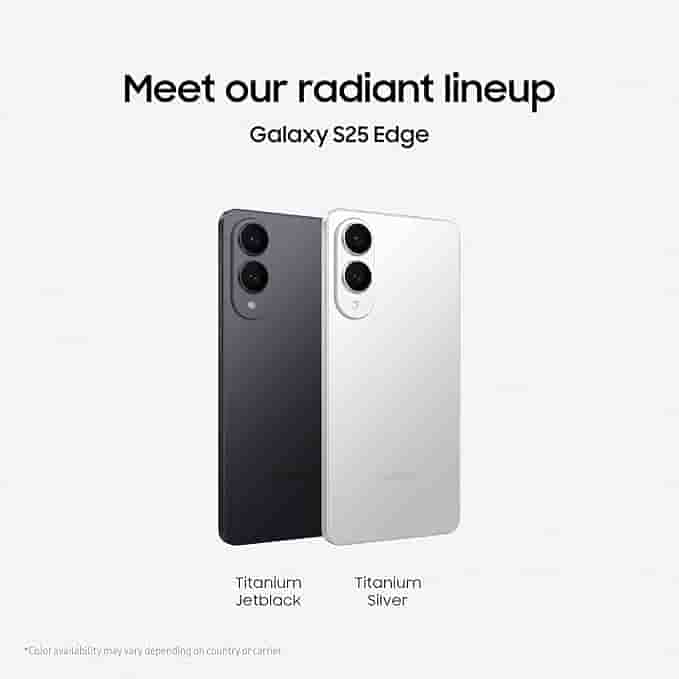
The S25 Edge has quickly become one of Samsung’s most talked-about smartphones — and not because it packs another incremental hardware bump. It’s because this phone dares to challenge an unspoken rule of the modern flagship world: thicker is better. In an era where most devices chase bigger batteries and massive camera arrays, Samsung has done something refreshingly bold. The S25 Edge strips down the excess and presents itself as a masterclass in minimalism — an ultra-thin, featherweight flagship that turns heads for its sheer elegance.

But this approach comes with risks. By pushing the boundaries of thinness, Samsung also flirts with the trade-offs that could make or break the experience. So, does the S25 Edge represent the future of sleek smartphone design, or has Samsung sacrificed too much on the altar of slimness?

Let’s dive deep.

71Rn0YmeDuL. SX679 min

Design and Build: Where the S25 Edge Defies Gravity

s25 edge display

At just 5.8 mm thin, the S25 Edge is stunningly slim — almost pencil-thin and noticeably sleeker than even the S25 Ultra’s 8.2 mm frame. The first impression when holding it is almost surreal. It feels impossibly light at 163 grams, yet reassuringly solid. Many early users have described it as “a sheet of metal that disappears in your hand,” which sums up Samsung’s engineering intent perfectly — to make technology vanish into elegance.

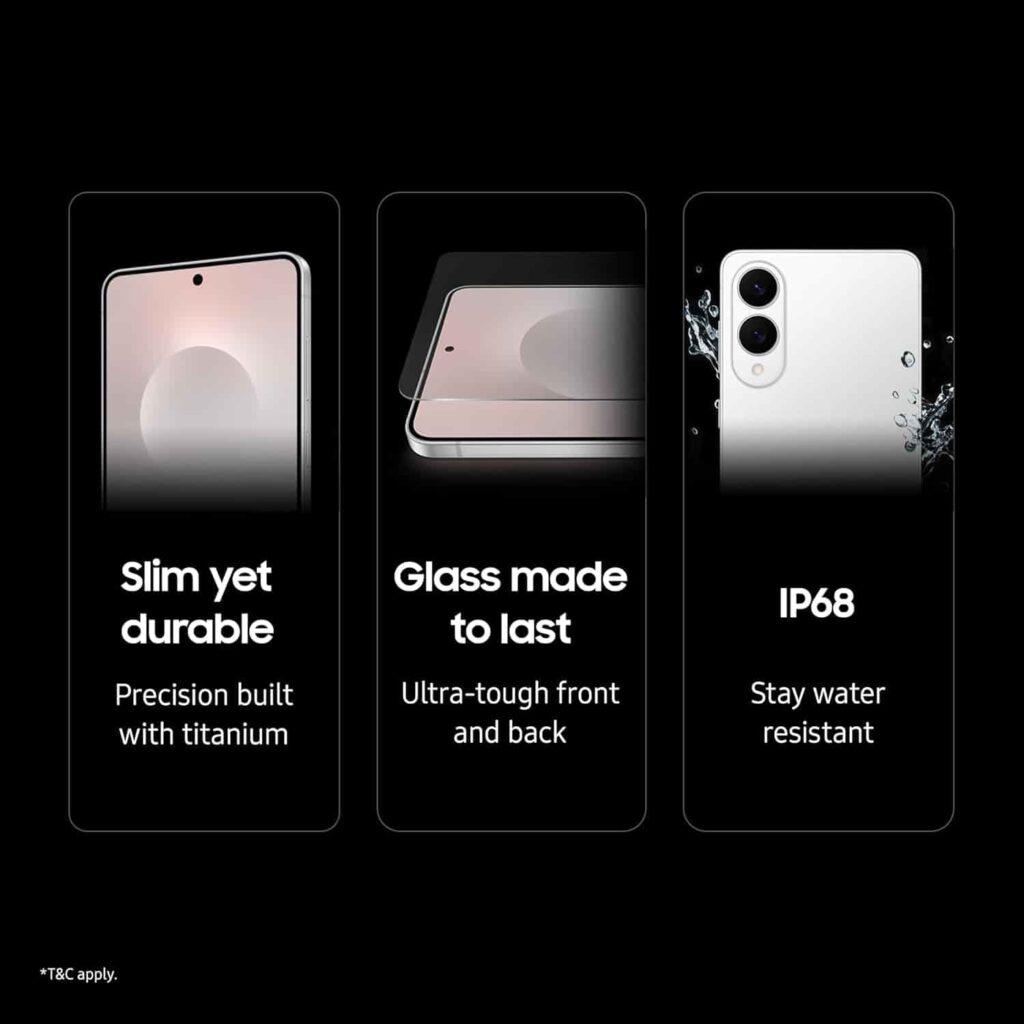
Despite its minimalist form, the S25 Edge is not a fragile showpiece. The titanium frame adds structural rigidity, while Gorilla Glass Ceramic 2 on the front and Victus 2 on the back ensure scratch and impact resistance. It also retains an IP68 rating, meaning dust and water are non-issues.

However, the phone’s ultra-thin design introduces one unavoidable side effect — the camera bump. It protrudes quite prominently, creating what reviewers humorously call “table wobble.” It’s a small aesthetic flaw in an otherwise breathtaking design, and one that subtly reminds you how far Samsung has gone to compress the rest of the chassis.

Still, there’s no denying that the S25 Edge feels futuristic. It’s the kind of phone that makes you rethink what a flagship should feel like.

Display: Samsung’s Visual Brilliance in a Slim Frame

617XhRInpxL. SX679 min

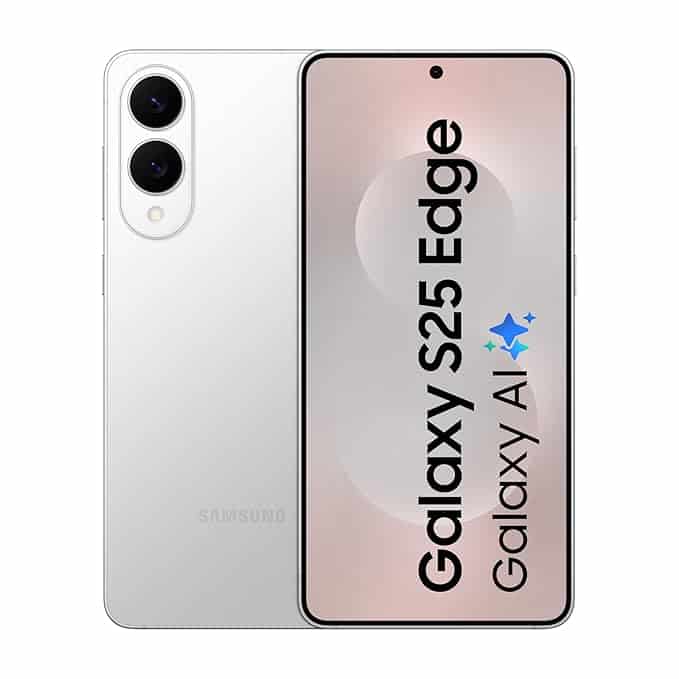
The S25 Edge carries a 6.7-inch Dynamic AMOLED 2X display with Quad HD+ (1440p) resolution and an LTPO 120Hz refresh rate, dynamically adjusting from 1Hz to 120Hz for optimal smoothness and efficiency. It’s bright — hitting up to 2600 nits peak brightness — and produces crisp, vivid colors with excellent contrast levels, even in direct sunlight.

Although Samsung skipped the anti-reflective coating found on the S25 Ultra, the visual experience here remains flagship-grade. Watching HDR content or gaming on this display feels fluid and immersive, aided by slim bezels that make the visuals stretch edge-to-edge.

The S25 Edge also integrates an ultrasonic fingerprint scanner beneath the screen, which is fast, secure, and effortless. And despite the limited internal space, Samsung managed to deliver stereo speakers that sound surprisingly rich and loud. Audio separation is solid, and while bass isn’t as deep as on the Ultra, it’s well-balanced for music, calls, and video playback.

For a device this thin, multimedia on the S25 Edge feels astonishingly premium.

Performance and Thermals: Slim Doesn’t Mean Weak

d159bc7d dc4f 49c9 91b3 db803a08e729. CR001464600 PT0 SX1464 V1 min

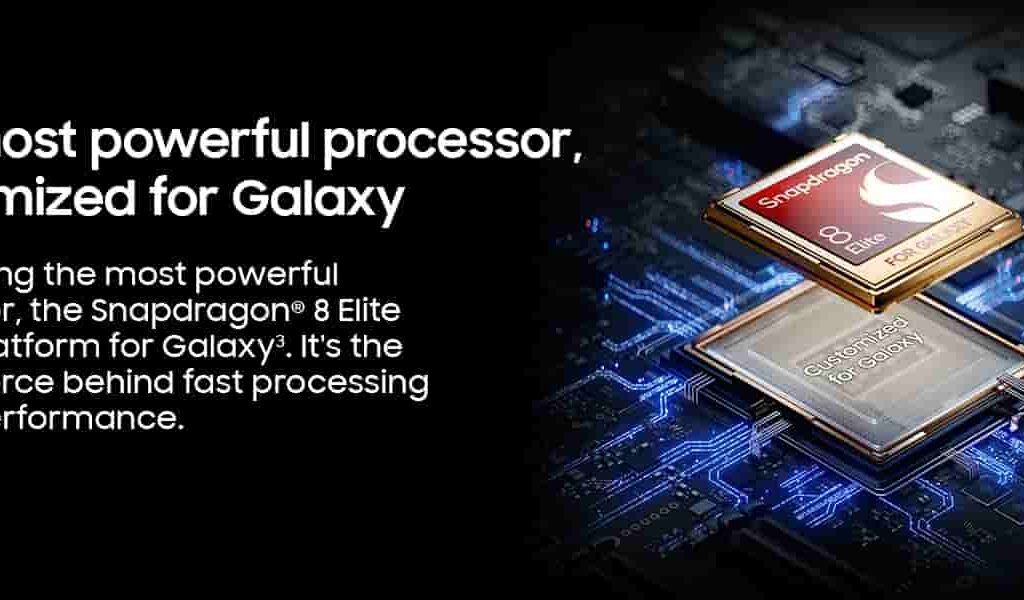
The S25 Edge might look delicate, but performance-wise, it’s a beast. Powering the device is the Snapdragon 8 Elite processor paired with 12GB LPDDR5X RAM and 256GB UFS 4.0 storage.

Benchmark numbers tell part of the story — scoring over 2 million on Antutu and close to 10,000 on Geekbench multi-core — but it’s the real-world performance that stands out. Everyday tasks feel instantaneous, animations are buttery smooth, and apps load with zero hesitation.

Samsung has also engineered clever ways to keep heat under control despite the phone’s slim frame. The vapor chamber cooling, thermal tape system, and new Tatim thermal insulator distribute heat efficiently. Even in long gaming sessions with Genshin Impact, the S25 Edge maintained stable frame rates (around 59–60 FPS) with minimal throttling, peaking at around 43°C — impressive for such a thin device.

Of course, it can get warm during extended gaming or multitasking, but not uncomfortably so. Samsung’s heat management is genuinely praiseworthy here — this is one of the best-optimized ultra-thin phones ever made.

Software and AI: One UI 7 Meets Galaxy AI

s25 edge one ui 7

Out of the box, the S25 Edge runs One UI 7 based on Android 15, featuring Samsung’s polished and intuitive software experience.

Samsung also leads in longevity — promising 7 years of OS and security updates, matching Google’s own software policy. That means your S25 Edge will remain supported until well into the 2030s, making it a safe long-term investment.

On the AI front, the S25 Edge feels smarter than ever:

  • Circle to Search lets you quickly find anything on-screen by circling it.

  • AI Eraser and Generative Edit make photo editing effortless.

  • AI Keyboard corrects tone, grammar, and writing style in real time.

  • Live Translate and Now Briefing make travel and multitasking seamless.

  • Gemini Live integration even allows the phone to “see” through the camera and describe or identify objects in real time — a glimpse into the AI-driven future of smartphones.

In short, the S25 Edge is not just about thinness — it’s also about intelligence.

Camera: A Premium Sensor with a Missing Piece

s25 edge camera

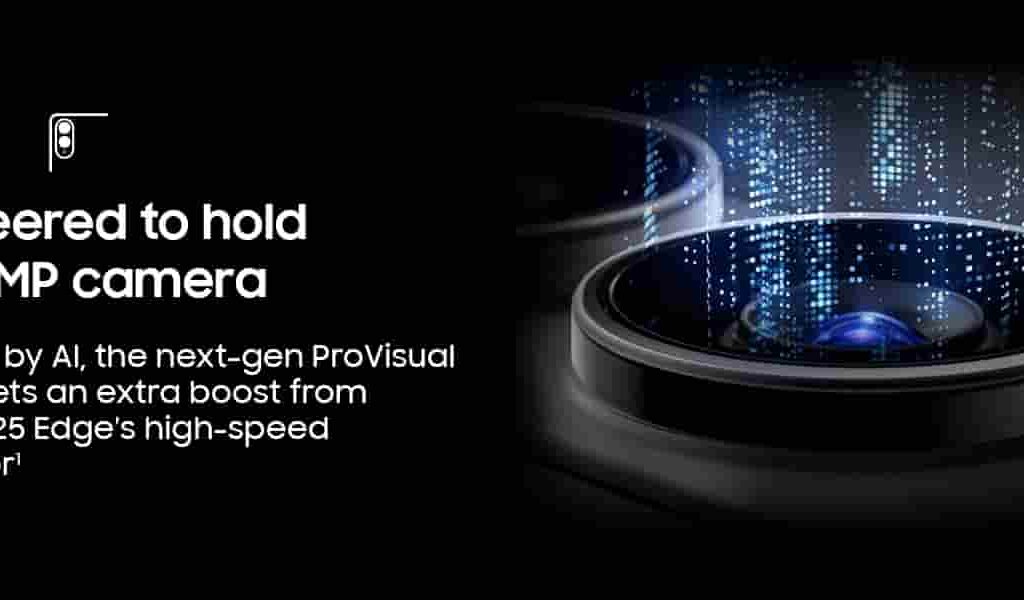
Here’s where the S25 Edge both shines and stumbles. It features a 200MP primary camera, the same flagship sensor used in the S25 Ultra, paired with a 12MP ultrawide lens.

Photos from the main sensor are excellent — crisp, colorful, and full of detail. The larger sensor captures 44% more light than the S25 Plus, leading to great low-light performance and dynamic range. The 12MP ultrawide camera, meanwhile, handles macro and scenic shots decently with consistent color calibration.

The 12MP selfie camera performs well too, producing natural skin tones and sharpness that stands out in video calls and selfies alike.

However, the lack of a dedicated telephoto lens is a missed opportunity. Zooming beyond 2x relies on digital processing, which works fine for casual shots but falls short for photography enthusiasts who expect the versatility of a triple-lens setup.

Still, with 8K video at 30fps, 4K HDR recording, and Pro Video Mode, the S25 Edge remains a strong contender in videography. It’s just not a photographer’s dream — and Samsung seems to know that.

Battery Life: The Price of Thinness

Here’s the elephant in the room — battery life. The S25 Edge comes with a modest 3,900 mAh battery, and that slim body doesn’t leave much room for more.

In daily usage, expect about 4.5 to 5 hours of screen-on time, which is decent for moderate use but underwhelming for heavy multitaskers or gamers. If you’re streaming, gaming, or navigating frequently, you’ll need to top up by late evening.

Charging is capped at 25W wired, which takes roughly 75 minutes for a full charge. It supports 15W wireless charging and 7.5W reverse wireless charging, but these are more about convenience than speed.

Samsung could have truly nailed this phone with silicon-carbon battery tech, but the S25 Edge still sticks to traditional lithium-ion. It’s a reminder that physics, not ambition, is often the ultimate limitation.

Verdict: The S25 Edge Is Not for Everyone — and That’s the Point

At a price of ₹1,01,999, the S25 Edge is not just another flagship; it’s a statement. It’s for those who appreciate elegance, minimalism, and cutting-edge engineering more than brute specs.

The S25 Edge doesn’t aim to please everyone. It’s designed for people who value comfort, pocketability, and sleekness — those who want a phone that feels premium without the bulk. If you live in a world of wireless chargers, light workloads, and aesthetic priorities, this phone might just feel perfect.

However, power users who prioritize endurance, camera versatility, or all-day gaming might find the S25 Ultra a better fit.

Ultimately, the S25 Edge is one of those rare devices that dares to be different. It’s not the best phone for everyone — but it might be the most intriguing one for those who crave design perfection.

FAQs about Samsung Galaxy S25 Edge

1. Is the Samsung Galaxy S25 Edge really the thinnest flagship phone?

Yes, the Samsung Galaxy S25 Edge measures just 5.8 mm thin, making it one of the slimmest flagship smartphones ever. Despite its ultra-slim body, it feels solid thanks to its titanium frame and Gorilla Glass Ceramic 2 protection.

The Samsung Galaxy S25 Edge features a 6.7-inch Quad HD+ Dynamic AMOLED 2X display with 120Hz refresh rate and up to 2600 nits brightness. It delivers vibrant colors, deep contrast, and smooth motion, even though it skips the anti-reflective coating of the Ultra.

Not really. The Samsung Galaxy S25 Edge uses an advanced vapor chamber cooling system and Tatim thermal insulator, keeping temperatures stable even during extended gaming. It maintains around 59–60 FPS in Genshin Impact with minimal throttling.

The Samsung Galaxy S25 Edge packs a 3,900 mAh battery, offering about 4.5–5 hours of screen-on time under normal use. While it’s not a power marathoner, it supports 25W fast charging, 15W wireless charging, and 7.5W reverse wireless charging.

If you value design, thinness, and comfort, the Samsung Galaxy S25 Edge is a masterpiece of engineering. But if you need battery endurance and a telephoto lens, the S25 Ultra is the more practical choice. The Edge is about elegance — not excess.