
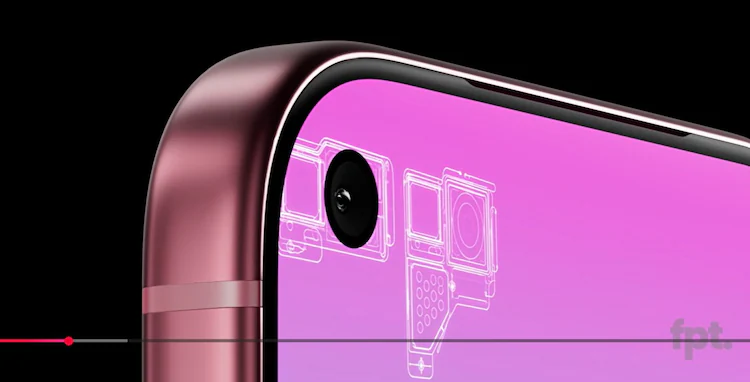
iPhone 18 Pro 1st look details emerging from multiple reports indicate that Apple is finally moving closer to a cleaner, more minimal display. According to sources cited by The Information, Apple plans to shift Face ID sensors under the display on the Pro models, leaving only a single visible cutout for the front camera.
Instead of placing the punch-hole camera at the centre, leaks suggest Apple may position it in the top-left corner of the display, where the clock currently sits. This would mark a clear departure from Apple’s centred approach that has defined recent iPhone generations.
If this design change materialises, the Dynamic Island would no longer be required to hide Face ID hardware. However, leakers suggest Apple may keep it alive as a software feature. In renders shared by Jon Prosser, the Dynamic Island shifts to the top-left corner and expands outward only when needed for activities such as navigation, calls, or live notifications.
### iPhone 18 Pro 1st look and the future of the Dynamic Island
iPhone 18 Pro 1st look rumours point to a quieter but meaningful redesign rather than flashy visual tricks. With Face ID moving beneath the screen, the front of the phone would appear far less cluttered, while preserving familiar functionality through software.
Reports indicate that this under-display Face ID setup may remain exclusive to the Pro models, with standard iPhone 18 variants expected to retain the existing Dynamic Island layout. Display development for the Pro models is reportedly being handled jointly by LG and Samsung, with a new LTPO+ panel designed to support the hidden sensors.
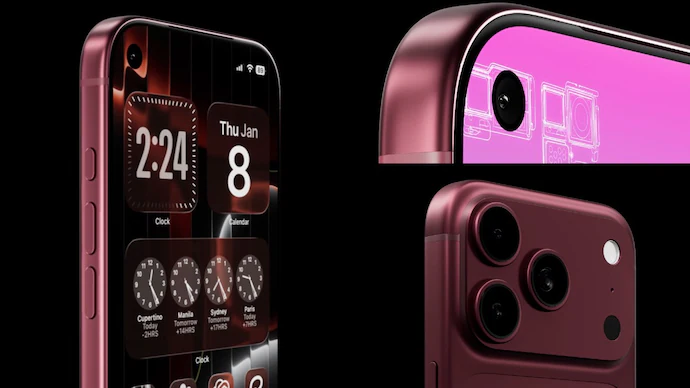
Beyond the display, leaks also hint at notable internal upgrades. The iPhone 18 Pro is expected to debut Apple’s A20 Pro chip, built on a 2nm process, offering improved performance and efficiency. Camera upgrades may include a variable aperture system on the main sensor, while Apple is also said to be testing new colour finishes such as burgundy, brown, and purple.
iPhone 18 Pro 1st look speculation also includes Apple’s in-house C2 modem and expanded satellite connectivity features, potentially allowing limited navigation or media sharing without cellular or Wi-Fi access.
As with all early leaks, these details remain unconfirmed. Apple is expected to officially unveil the iPhone 18 Pro lineup at its fall event, where the company’s long-rumoured front-design refresh will finally be revealed.
Read More-
M5 MacBook Pro review: exceptional performance leap or minor upgrade?
M5 iPad Pro review: hands-on testing and M4 upgrade check
ChatGPT Go free in India — OpenAI’s biggest expansion for Indian users in 2025
Redmi K90 Pro Max Launched: The Ultimate Value Flagship of 2025?
iPhone 17 Review: Smarter, Sleeker, Stronger
iPhone 17 Pro Max – The Most Powerful iPhone Yet
Best 5 Camera Phones in India for Stunning Photos (2025) – Full Reviews